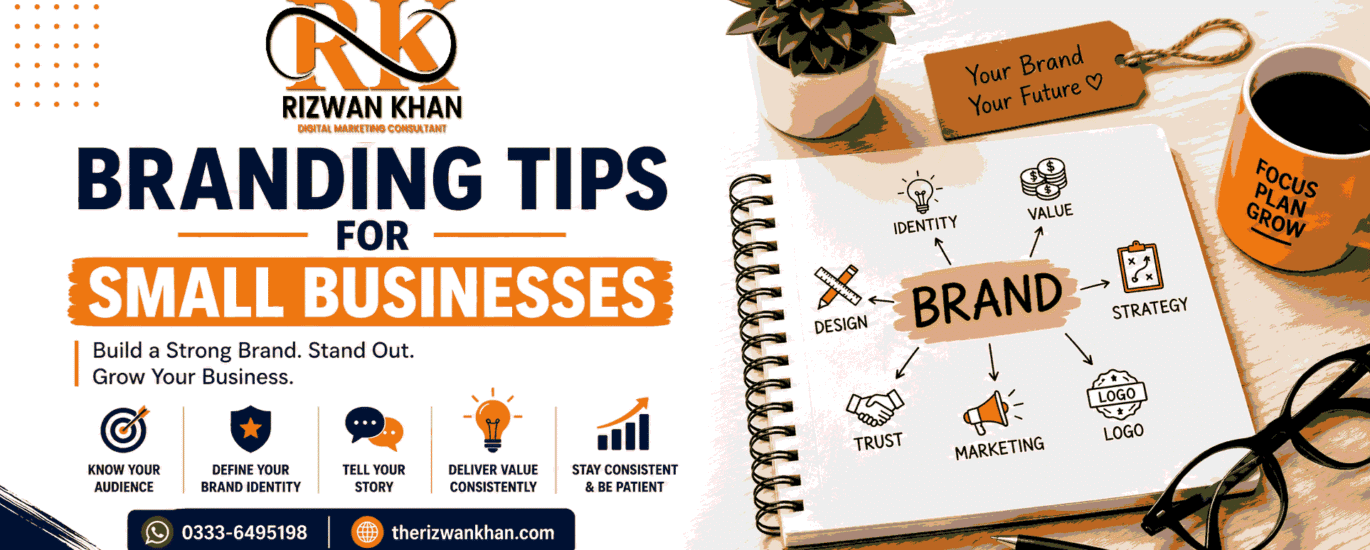
When people hear your business name, what comes to mind? That first thought, that feeling, that image. That is your brand. And whether you are a bakery in a small town, a freelance designer working from home, or a local clothing store trying to grow. Your brand is the single most powerful tool you have.
Most small business owners think branding is something only big companies need. They pour everything into their product or service and leave the branding part for later. The problem is, later often never comes. And by then, competitors who understood the value of a strong brand have already taken the customers you deserved.
This guide covers practical, real-world branding tips for small businesses: from building your visual identity to writing your first tagline to growing brand trust without a big budget.
What Is Branding and Why Does It Matter for Small Businesses?
Branding is not just your logo or your color scheme. It is the complete experience a person has every time they interact with your business. It is how your packaging looks, how your team speaks to customers, what your website feels like, and what people say about you when you are not in the room.
For small businesses, a strong brand does something that paid advertising cannot always do. It builds trust over time.
Branding vs. Marketing: What’s the Difference?
People often mix these two up. Marketing is what you do to get someone’s attention. Branding is what makes them stay.
You can run a great ad campaign and bring a hundred people to your store. But if they walk in and nothing feels consistent: the logo looks different from the flyer, the staff sounds nothing like your Instagram page, the product packaging looks thrown together. They leave and they do not come back.
Marketing drives traffic. Branding builds relationships.
Why Small Businesses Often Ignore Branding (And Why That’s a Mistake)
The most common reason small business owners skip branding is simple: it feels expensive and complicated. Hiring a brand agency, paying for custom designs, building a brand strategy. These things sound like they belong in a boardroom, not a small shop.
But here is the truth. Poor branding costs more than good branding ever will. It costs you in lost customers, weak referrals, low perceived value, and the inability to charge what your product or service is actually worth.
A well-branded small business can charge more, attract better customers, and grow faster than an unbranded competitor with a better product.
Know Your Audience Before You Build Your Brand
Before you design a logo or write a tagline, you need to be crystal clear about one thing: who are you building this brand for?
Your brand is not for you. It is for your customer. And if you do not understand your customer deeply, everything else you build will feel off.
How to Define Your Target Customer
Start with the basics. Who buys from you right now? What is their age range? Where do they live? What do they do for work? What do they do for fun?
Then go deeper. What problems do they have that your product or service solves? What other options are they choosing between? What makes them trust a brand? What makes them walk away?
When you answer these questions honestly, you stop guessing and start building a brand that actually connects.
Understanding Customer Pain Points and Expectations
Every customer comes to you with something they need solved. The more clearly you understand that need, the more powerfully your brand can speak to it.
A mother looking for children’s clothing is not just looking for fabric. She wants safety, comfort, and value. A young professional looking for a barber is not just looking for a haircut. He wants speed, quality, and someone who understands his style.
Your brand’s job is to show, before they even walk through the door, that you understand exactly what they are looking for.
Create a Clear Brand Identity
Your brand identity is the visual and verbal system that represents who you are. It includes your name, logo, colors, typography, and overall design style. When done well, it creates instant recognition and emotional connection.
Choose a Memorable Business Name
Your name is often the first thing a potential customer hears. It should be easy to say, easy to spell, and easy to remember. It should also give some sense of what you do or how you do it differently.
Avoid names that are too generic, too complicated, or too similar to existing businesses in your space. Check if the domain name is available. Search social media platforms to see if handles are open. A name that works across all channels is worth the extra time to find.
Design a Logo That Reflects Your Values
A logo is not just decoration. It is a visual shorthand for everything your brand stands for. A good logo works in black and white, looks great small (on a phone screen) and large (on a banner), and feels right for your industry while still standing out.
You do not need to spend a fortune on a logo. Tools like Canva, Looka, and Fiverr give small businesses access to quality design at an accessible price. What matters most is that your logo is clean, intentional, and consistent with your overall brand.
Pick Colors and Fonts That Speak for Your Brand
Colors carry meaning. Blue communicates trust and reliability. Green is associated with health, nature, and growth. Orange feels energetic and friendly. Red commands attention and urgency. Black signals luxury and sophistication.
Choose two to three brand colors and stick with them everywhere: your website, packaging, social media, business cards, email newsletters. The same goes for typography. Pick one or two fonts and use them consistently.
Consistency in visual identity is what makes a brand feel professional, even when the budget is small.
Craft a Strong Brand Voice and Messaging
Your visual identity catches the eye. Your brand voice captures the heart. How you write, speak, and communicate with people is just as important as how your brand looks.
What Is Brand Voice and Why It Matters
Brand voice is the personality that comes through in all your written and spoken communication. It is the difference between a social media post that feels alive and one that feels like it was written by a robot.
Are you warm and conversational? Authoritative and expert? Fun and a little bit bold? Calm and reassuring? Pick a personality that feels true to who you are and who your customers need you to be. Stay consistent with it everywhere.
Write a Brand Tagline That Sticks
A tagline is a short, memorable phrase that captures what your business does or what it stands for. It is not a mission statement. It is not a sales pitch. It is a one-line summary of your promise to the customer.
Good taglines are simple, specific, and just a little bit surprising. They do not try to say everything. They say the one thing that matters most.
Think about what you want a stranger to feel when they read your tagline for the first time. That feeling is what your tagline should deliver.
Keep Your Messaging Consistent Everywhere
Your website, your social media profiles, your packaging, your email subject lines. All of it should sound like it comes from the same place. If your Instagram is playful but your website reads like a legal document, you have a consistency problem.
Create a simple brand messaging guide for yourself. Write down your brand voice in a few words. List phrases you love and phrases you would never use. Include examples of how you would handle a customer complaint, announce a new product, or respond to a comment online. This document becomes your reference every time you communicate as your brand.
Build Brand Trust and Credibility
People do not buy from businesses they do not trust. Trust is the foundation of every sale, every repeat customer, and every word-of-mouth referral. Building it takes time, but there are specific things you can do to accelerate it.
Use Customer Reviews and Testimonials
Social proof is one of the most powerful branding tools available to small businesses. When a potential customer sees that real people have had a good experience with you, their hesitation drops significantly.
Ask satisfied customers to leave a review on Google, Facebook, or whatever platform is most relevant to your business. Feature testimonials on your website. Share customer success stories on social media. The goal is to let your existing customers do some of the branding work for you.
Respond to every review, the good ones and the difficult ones. How you handle a negative review says more about your brand than ten positive ones.
Show the Human Side of Your Business
People connect with people, not logos. Sharing the story of how your business started, introducing the team behind the product, or showing a behind-the-scenes look at how things are made. These small acts of transparency build enormous trust.
You do not need to be perfect. You just need to be real. A small business owner who talks openly about the challenges of building something from scratch is far more relatable than a brand that only shows its polished, finished side.
Be Consistent with Quality
Nothing destroys a brand faster than inconsistency in the actual product or service. You can have the most beautiful logo and the most compelling tagline, but if the quality of what you deliver varies from one day to the next, your brand suffers.
Make quality a non-negotiable standard. When something goes wrong, and it will, own it, fix it, and learn from it. Customers forgive mistakes. They do not forgive indifference.
Use Social Media to Strengthen Your Brand
Social media is one of the most cost-effective branding tools a small business has access to. Used well, it builds community, drives loyalty, and keeps your brand in front of the people who matter most.
Which Platforms Work Best for Small Business Branding
Not every platform is right for every business. The key is to be where your customers already spend their time.
Instagram and Pinterest work well for visual businesses: fashion, food, home décor, beauty, and fitness. LinkedIn is the right place for B2B service providers and professional consultants. Facebook remains valuable for local businesses with an older customer base. TikTok has become a powerful discovery platform for small businesses with a story to tell.
You do not need to be everywhere. Pick two platforms, do them well, and be consistent.
Content Ideas That Build Brand Loyalty
The best social media content for small businesses is not promotional. It is relational. Share your process. Educate your audience on something they care about. Celebrate your customers. Give them a behind-the-scenes look at how you do what you do.
Mix content types. A short video explaining one thing you know better than anyone in your field. A photo of a happy customer with their permission. A carousel post walking through your top tips. A simple question that invites your followers to share their experience.
The brands that win on social media are not the ones who post the most. They are the ones who post with purpose.
Branding on a Small Budget: Practical Tips That Actually Work
Strong branding does not require a large budget. It requires clarity, consistency, and creativity. With the right tools and the right approach, a small business can look and feel like a serious brand without spending like one.
Free and Low-Cost Branding Tools
Canva is arguably the most valuable free tool for small business branding. It offers professional templates for social media posts, business cards, presentations, logos, and more.
Google Fonts provides hundreds of free, high-quality typefaces. Coolors is a free tool for building color palettes. Unsplash and Pexels offer free professional photography. These tools, used together, can build a visually cohesive brand presence at almost no cost.
For your website, platforms like Squarespace, Wix, and WordPress offer clean, professional templates that let a small business owner build a branded site without a developer.
DIY Branding vs. Hiring a Professional
There is no one-size-fits-all answer here. If you are in the earliest stages of your business, doing your own branding using quality tools is a smart way to get started without overcommitting financially.
But as your business grows, there are certain investments worth making. A professional logo designed by someone who understands visual identity, a brand photography session that gives you real images to use across your platforms, a copywriter who can sharpen your messaging. These investments pay back more than their cost more than their cost in the credibility and clarity they bring.
The rule of thumb: start with what you can do well yourself, and bring in professionals for the areas where the quality gap is costing you customers.
Common Branding Mistakes Small Businesses Make
Even well-intentioned small business owners make branding mistakes that hold them back. Knowing what to avoid is just as important as knowing what to do.
Copying Competitors Instead of Standing Out
It is tempting to look at a successful competitor and try to replicate their brand. The problem is that the second brand always looks like an imitation of the first. Customers notice, even when they cannot articulate why.
Instead of copying, study your competitors to understand what they are not doing. Find the gap in the market. Build a brand that owns that space. The goal is to be the obvious choice for a specific type of customer, not a slightly cheaper version of someone else.
Inconsistent Visual Identity Across Platforms
Your logo should be the same on your business card, your website, your Instagram profile, and your storefront. Your brand colors should match across every touchpoint. Your fonts should be consistent. When they are not, the brand feels unfinished and unprofessional, even if the product itself is excellent.
Take time to audit your brand presence. Look at everything a customer might see and ask: does this feel like it comes from the same place? If the answer is no, fix it.
How to Measure If Your Branding Is Working
Branding is a long-term investment, but that does not mean you cannot track whether it is working. There are clear signals that your brand is gaining traction. There are also clear signals that something needs to change.
Key Metrics to Track
Watch for increases in direct traffic to your website. When people type your business name into their browser rather than through an ad or search. That is a sign your brand is being remembered.
Track social media follower growth and engagement rates. Pay attention to how often people tag your business in their posts. Monitor how frequently your business name appears in reviews, shares, and online conversations.
Ask new customers how they heard about you. If more and more people say “someone recommended you” or “I’ve seen you around for a while,” your brand is doing its job.
When to Refresh or Rebrand
Every brand needs to evolve. If your visual identity feels dated, if your target audience has shifted, if your business has grown significantly beyond its original scope, these are signs it may be time to refresh your brand.
A brand refresh does not mean starting from scratch. Often it means modernizing your logo, updating your color palette, sharpening your messaging, and making sure everything feels current and cohesive.
Rebranding should be a strategic decision, not a reactive one. Do it when you have a clear reason and a clear direction and not just because you are bored with the current look.
Final Thoughts: Strong Branding Is a Long-Term Investment
Building a brand takes time. It does not happen in a week or after one good social media post. It happens through thousands of small, consistent actions: the way you answer the phone, the packaging you choose, the words you use on your website, the way you handle a difficult situation in front of a customer.
The businesses that win over the long term are not always the ones with the best product. They are the ones with the most trusted brand. And for small businesses, that trust is built one interaction at a time.
Start where you are. Use what you have. Stay consistent. Your brand is already being formed in the minds of your customers. The question is whether you are being intentional about what it says.
This article is written for small business owners looking to build a brand that grows with them. Whether you are just starting out or looking to sharpen what you have already built, the principles here apply at every stage. If you need further help please contact Rizwan Khan Digital Marketing Consultant.