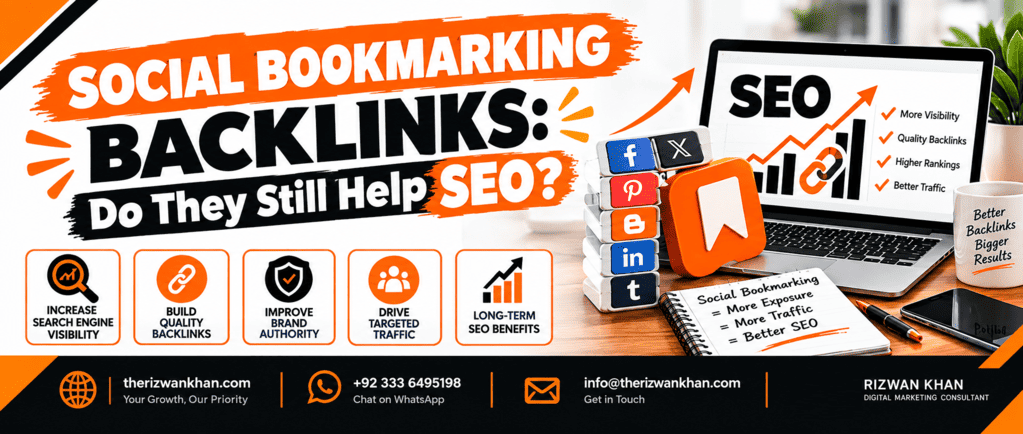
Social bookmarking backlinks were one of the earliest link building tactics in SEO, popular long before content marketing and digital PR became the standard. Many businesses still use bookmarking sites today, sometimes out of habit and sometimes because an SEO vendor includes it in a cheap link package. The question worth asking is not whether these links exist, but whether they still do anything meaningful for a website in the current search landscape.
This guide explains what social bookmarking backlinks actually are, how they are created, what real value they offer, what Google says about them, and how to use them without wasting time or triggering a manipulative link building flag.
TL;DR
- Social bookmarking backlinks rarely improve Google rankings directly since most are nofollow
- Real value comes from referral traffic, faster indexing of new pages, and content discovery
- Works best on active, niche-relevant platforms, not generic bookmarking directories
- Mass submitting the same page to hundreds of sites looks manipulative to Google
- Avoid using identical titles and descriptions across every submission
- Don’t treat bookmarking as a standalone strategy, pair it with quality content and real outreach
- Best measured by referral traffic and engagement, not raw link count
What Are Social Bookmarking Backlinks?
A social bookmarking backlink is a link created when someone saves or submits a web page to a bookmarking platform, along with a title, a short description, and often tags. The page gets stored on that platform’s public directory, and the link back to the original page becomes the backlink. Sites like Reddit, Mix, Pinterest, and various dedicated bookmarking directories fall into this category, though each one works slightly differently.
How Social Bookmarking Sites Work
A bookmarking site functions as a public library of saved links. Users submit pages they find useful, categorize them, and other users can browse, vote, or comment on those submissions. Popular submissions often rise to the top of a category or a homepage feed, which increases their visibility far beyond the original poster’s audience. This is different from a private bookmark saved only for personal use.
Social Bookmarking vs Social Media Sharing
Sharing a link on a social media platform like Facebook or X is a single post that disappears from most feeds within hours. Social bookmarking is closer to a permanent directory entry that remains discoverable through search and browsing long after it was submitted. Bookmarking is more static and archival, while social sharing is more temporary and conversational.
How a Backlink Gets Created Through Social Bookmarking
The technical process behind a bookmarking backlink is fairly simple, but the details of how it is done make a real difference to its value.
Submitting a Page to a Bookmarking Site
A user creates an account on a bookmarking platform, pastes the URL of the page they want to save, and the platform usually pulls in the title and a preview automatically. The user then adds a description and selects a category or tags before publishing the submission.
Tags, Categories, and Descriptions
Tags and categories help other users discover the bookmark through browsing or the platform’s internal search. A description written in natural language, explaining what the page actually offers, tends to perform better than one stuffed with keywords, both for the platform’s own users and for how search engines interpret the page.
Nofollow vs Dofollow Links on Bookmarking Sites
The overwhelming majority of social bookmarking sites use nofollow links, meaning they do not pass direct ranking authority to the linked page. A handful of older or smaller platforms still use dofollow links, but chasing these specifically for ranking purposes is a low value strategy that search engines have grown very good at recognizing.
Do Social Bookmarking Backlinks Actually Help SEO?
The honest picture here is similar to press releases: bookmarking rarely moves rankings on its own, but it can support a broader strategy in specific ways.
Direct Ranking Impact vs Indirect Value
Because most bookmarking links are nofollow, expecting a direct ranking boost from submitting a page to a handful of bookmarking sites is unrealistic. The value these links provide is almost entirely indirect, through visibility, discovery, and occasional referral traffic rather than passed authority.
Faster Indexing of New Pages
A bookmarking submission can help a brand new page get crawled and indexed faster, particularly for a small or newly launched site that does not yet have many other inbound links pointing to it. This is a genuine, practical benefit even without any ranking impact.
Referral Traffic and Content Discovery
A bookmark that gets picked up and voted on within an active community can send a real burst of visitors to a page, sometimes far more than a typical backlink would. This works especially well on platforms with engaged niche communities relevant to your content.
Social Signals and Brand Visibility
Repeated, genuine visibility across bookmarking and community platforms contributes to how recognizable a brand becomes online, even though social signals are not a confirmed direct ranking factor. Consistent presence across multiple platforms supports the kind of entity recognition search engines increasingly rely on.
Our Experience Using Social Bookmarking for Client Sites
In practice, social bookmarking submissions have shown the most benefit when tied to genuinely useful pages, such as an original guide or a tool, rather than promotional pages. Submissions to niche, active communities relevant to the topic consistently outperform mass submissions to generic bookmarking directories, both in referral traffic and in how quickly new content gets discovered. Pages submitted purely for the sake of generating a backlink, with no real reason for a community to care about them, have rarely produced any measurable result.
Google’s Guidelines on Social Bookmarking Links
Google’s stance on bookmarking links follows the same logic it applies to most manufactured link sources.
What Counts as Manipulative Link Building
Submitting the same page to dozens or hundreds of bookmarking sites purely to generate backlink volume, especially using automated tools, falls under Google’s definition of manipulative link building. The intent behind the submission, generating links versus genuinely sharing something useful, is what determines whether it crosses a line.
Why Most Bookmarking Links Are Low Value or Nofollow
Bookmarking platforms rely on user generated submissions with very little editorial control, which is exactly why search engines treat links from them cautiously. A link that anyone can create in a few seconds, with no review process, naturally carries far less weight than a link earned through genuine editorial merit.
Risks of Mass Submitting to Bookmarking Sites
Automated or bulk submission tools that post the same content to hundreds of bookmarking sites within a short time window create an unnatural pattern that is easy for search engines to detect. This kind of activity is one of the more obvious signals of a manipulative link building campaign and can contribute to a site being flagged, even if no single link is harmful on its own.
Social Bookmarking vs Other Link Building Methods
Seeing where bookmarking fits next to other tactics helps clarify how much weight to give it in a broader strategy.
Social Bookmarking vs Guest Posts
A guest post is reviewed by an editor, published within relevant content, and usually carries a dofollow contextual link. Bookmarking requires no editorial review and is almost always nofollow. Guest posts carry significantly more direct SEO value when done on relevant, quality sites.
Social Bookmarking vs Directory Submissions
Directory submissions and bookmarking are similar in that both involve submitting a URL to a third party platform with minimal barriers. Bookmarking has an advantage in that active communities can genuinely discover and engage with the content, which directories rarely offer.
Social Bookmarking vs Digital PR
Digital PR involves earning organic coverage through direct outreach to journalists and publishers, resulting in dofollow, contextual, editorially reviewed links. Bookmarking is self-submitted and carries none of that editorial weight. Digital PR should be the priority for any business serious about link building, with bookmarking used as a smaller supporting tactic.
How to Use Social Bookmarking the Right Way
Used thoughtfully, bookmarking still has a place in a modern SEO strategy, just not as a primary tactic.
Choosing Reputable, Active Bookmarking Sites
Prioritize platforms with real, active user communities relevant to your industry over generic directories that exist purely to collect submissions. An active platform means a real chance of genuine engagement rather than a link sitting unseen on a page nobody visits.
Writing Genuine Descriptions Instead of Keyword Stuffing
Write the submission description the way you would describe the page to a real person, focusing on what they will actually get from it. A natural description performs better with both the platform’s community and with how search engines evaluate the overall pattern of your link profile.
Bookmarking Content Worth Sharing
Save bookmarking effort for pages that genuinely offer something useful, such as an original guide, research, or a tool, rather than every page on your site. Content worth bookmarking is content a real person would want to save and revisit.
Choosing the Right Social Bookmarking Platforms
Not every bookmarking site is worth the time it takes to submit to it.
Signs of a Reputable Bookmarking Site
Look for active user engagement, visible comments or votes on submissions, a reasonable amount of real traffic, and a platform that has not been overrun by obvious spam submissions. A quick browse through the site’s recent activity usually reveals whether real people are using it.
Red Flags of Spammy or Dead Bookmarking Networks
Avoid platforms where every visible submission looks like a promotional link with no engagement, sites with broken design or clearly outdated software, and any service that offers to submit your page to hundreds of bookmarking sites automatically for a fee. These almost always produce links with no real value attached.
Who Should Use Social Bookmarking Backlinks
Bookmarking suits some situations better than others.
Bloggers and Content Publishers
Writers producing original guides, research, or in depth articles can benefit from submitting genuinely useful pieces to relevant niche communities where readers are actively looking for that kind of content.
Small Businesses Building Initial Visibility
A new business with very few existing backlinks can use a small number of thoughtful bookmarking submissions as one part of building initial visibility, alongside other, stronger link building efforts.
Ecommerce Sites Promoting New Product Pages
An ecommerce brand launching a genuinely notable new product can see referral value from bookmarking on platforms with communities interested in that product category, though this works far better for interesting or unique products than routine catalog additions.
Common Mistakes Businesses Make with Social Bookmarking
Most disappointment with bookmarking comes from a small set of repeated mistakes.
Submitting the Same Page to Hundreds of Sites at Once
Mass submitting one page across a large number of bookmarking sites within a short period creates an unnatural pattern and rarely produces meaningful traffic or visibility, since most of those platforms have little to no active audience.
Using Identical Anchor Text Everywhere
Repeating the exact same title and description across every submission looks automated and reduces the chance of genuine engagement, beyond also creating an unnatural link pattern.
Treating Bookmarking as a Standalone SEO Strategy
Bookmarking works best as a small supporting piece of a broader strategy that includes quality content, genuine outreach, and other stronger link sources, not as the main tactic a site relies on for growth.
Measuring the Real Value of Social Bookmarking Backlinks
Because bookmarking rarely affects rankings directly, the right metrics look at what it actually accomplishes.
Metrics That Actually Matter
Track referral traffic from each bookmarking submission, engagement such as votes or comments on active platforms, and any secondary shares or mentions that resulted from the original bookmark being seen by a wider audience.
Why Link Count Alone Is Misleading
A large number of bookmarking backlinks means very little if none of them sent real traffic or engagement. Counting links without checking whether any of them did anything useful gives a false sense of progress and can hide the fact that the effort produced no real return.
Frequently Asked Questions About Social Bookmarking Backlinks
Here are Social Bookmarking Backlinks FAQs:
Do social bookmarking backlinks improve Google rankings directly?
Rarely. Most bookmarking links are nofollow, so their value comes from referral traffic, faster indexing, and visibility rather than passed ranking authority.
Is social bookmarking against Google’s guidelines?
Bookmarking itself is not against guidelines. Mass submitting the same page to many sites purely to generate links is what Google considers manipulative link building.
How many social bookmarking submissions should a website have?
There is no set number. A small number of submissions to genuinely active, relevant platforms is more useful than a large number spread across low quality or inactive sites.
Is social bookmarking still worth doing?
It can still help with referral traffic and content discovery when used selectively on active, relevant platforms, but it should never be treated as a primary link building strategy.
What is the difference between social bookmarking and digital PR?
Social bookmarking is self-submitted with no editorial review and is almost always nofollow. Digital PR involves earning organic, editorially reviewed coverage through direct outreach, which carries far more SEO value.
Conclusion: The Smart Way to Use Social Bookmarking Backlinks
Social bookmarking backlinks are not the ranking tool they were once thought to be, but they still have a place when used with intention. Submitting genuinely useful content to active, relevant communities can produce real referral traffic and visibility, while mass submitting to generic directories rarely accomplishes anything beyond wasted time.
The businesses that get the most value treat bookmarking as one small supporting piece of a wider strategy, not a shortcut to backlinks or rankings on its own. You can get Social Bookmarking Sites to make backlinks for your website.